When planning a renovation or new build, most people focus on walls and floors. But the ceiling plays a big role in how a room looks and feels. The right ceiling tile texture can improve lighting, control sound, and add style to any space
Selecting the right ceiling tile texture is essential for commercial spaces. From smooth, modern finishes to intricate embossed patterns, ceiling tiles can enhance both style and functionality. Acoustic tiles improve sound control, textured tiles add depth and character, and smooth tiles reflect light to brighten interiors. By considering factors like noise reduction, durability, maintenance, and overall design goals, you can ensure your ceiling not only looks professional but also performs effectively.
Choosing the right ceiling tile texture matters. Here are ceiling tile texture styles worth considering.
Key Takeaways
- Ceiling tile texture impacts lighting, acoustics, efficiency, and design
- Smooth tiles look modern, while acoustic tiles improve sound control
- Material choice affects durability and performance
- Textured and coffered styles add depth and character
- NRC, light reflectance, and installation type support long-term performance
Smooth Ceiling Tiles for a Clean, Modern Look
Smooth ceiling tiles are widely used in commercial and professional environments because of their clean, uniform appearance. Their flat surface creates consistent grid lines and a streamlined finish, supporting modern interior design.
These tiles are especially effective in:
- Corporate offices
- Medical facilities
- Retail spaces
- Educational buildings
Why Choose Smooth Ceiling Tiles?
Smooth ceiling tiles are a popular choice because they offer a clean, seamless appearance and are easy to install within standard suspension systems. Their low-maintenance surface and high light reflectance make interiors feel brighter and more open, while remaining compatible with modern lighting layouts.
By reflecting light evenly, smooth tiles can reduce the need for extra fixtures, improving energy efficiency without compromising a polished look. For projects that value simplicity, consistency, and long-term practicality, smooth ceiling tiles remain one of the most reliable options.
Acoustic Ceiling Tiles for Better Sound Control
In high-traffic or shared environments, acoustic ceiling tiles are essential. These tiles are engineered to absorb sound waves, reduce echo, and improve speech clarity. Ceil Tex installs acoustic ceiling tiles in offices, schools, and healthcare facilities where noise control and speech clarity directly impact comfort and productivity.
They are commonly specified for:
- Open-plan offices
- Schools and universities
- Hospitals and clinics
- Conference rooms
- Retail environments
Acoustic ceiling tiles are rated for Noise Reduction Coefficient (NRC), which measures how effectively they absorb sound. Higher NRC ratings indicate stronger sound absorption performance.
By reducing background noise and echo, acoustic ceiling tiles create more comfortable and productive spaces. They improve communication, minimize distractions, and support compliance with modern building performance standards.
Importantly, today’s acoustic ceiling textures combine performance with aesthetics. Designers no longer have to sacrifice visual appeal for sound control.
Eco-Friendly Ceiling Tile Options
Sustainability is now a standard consideration in commercial construction and renovation. Many ceiling tiles are manufactured using recycled content and environmentally responsible processes.
Eco-friendly ceiling tiles provide:
- Reduced environmental impact
- Compliance with sustainability initiatives
- Durable material performance
- Consistent professional appearance
In addition to recycled content, some ceiling tile systems improve indoor air quality. They can also enhance energy efficiency through better light reflectance.
For organizations pursuing green building goals or responsible material sourcing, eco-conscious ceiling tile textures offer measurable benefits without compromising structural integrity or design standards.
Textured and Patterned Ceiling Tiles
Metal ceiling tiles, including aluminum ceiling panels, are also used in certain commercial and industrial settings. Aluminum ceiling tiles are lightweight, corrosion-resistant, and often available in silver or metallic finishes. These options are common in basements, utility spaces, and modern commercial interiors where durability and moisture resistance are important.
Textured ceiling tiles introduce depth and dimension to large ceiling spans. Unlike smooth surfaces, textured finishes create subtle variation that enhances visual interest while maintaining a professional look.
These tiles are designed to:
- Improve light diffusion
- Minimize the visibility of minor surface imperfections
- Add architectural character
- Break up large flat ceiling areas
Common textured styles include:
- Fine fissured surfaces
- Subtle raised patterns
- Geometric designs
- Decorative embossed finishes
Textured ceiling tiles are often selected for lobbies, shared workspaces, reception areas, and other commercial interiors. They offer visual appeal while remaining practical and functional.
They strike a balance between aesthetics and performance, making them suitable for both modern and transitional environments.
Coffered Ceiling Tile Styles for a Classic Finish
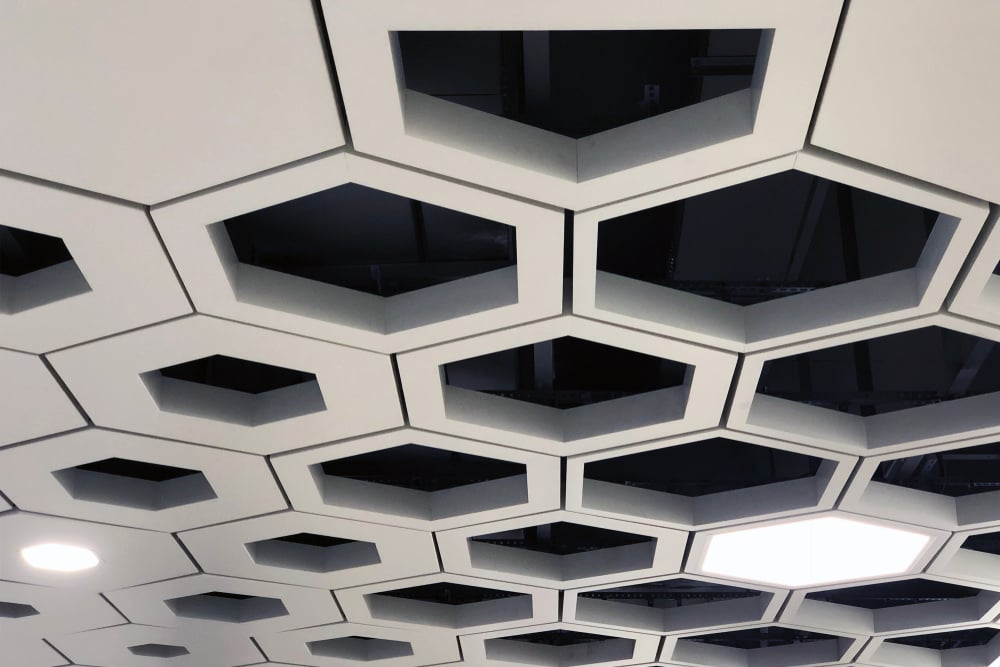
Coffered ceiling tile styles feature a structured grid pattern that adds architectural depth and definition. This design approach has been used for decades to bring visual structure to large spaces.
Coffered layouts create strong visual lines, add symmetry and balance, define open areas, and elevate the perceived ceiling height. They are commonly installed in executive offices, boardrooms, corporate headquarters, high-end commercial interiors, and reception areas.
While more detailed than standard smooth tiles, coffered ceiling systems remain compatible with suspension grids and integrated lighting. For projects that require a more distinguished and refined finish, coffered ceiling tile styles provide lasting visual impact.
How to Choose the Right Ceiling Tile Texture
Selecting the right ceiling tile texture involves evaluating both performance requirements and aesthetic goals. The ceiling must integrate with lighting systems, HVAC components, fire safety features, and maintenance access.
Key questions to consider:
- Is sound control a primary concern?
- What type of environment is being designed?
- Does the space require high light reflectance?
- Are sustainability standards part of the project goals?
- How much ongoing maintenance access is required?
A properly selected ceiling tile texture supports operational efficiency, visual consistency, and long-term durability. Poor selection, on the other hand, can result in performance issues, rework, and increased maintenance costs.
Ceiling Tile Materials and Performance Factors
When evaluating ceiling tile textures, it is important to understand the materials used in manufacturing. Different ceiling tile materials affect durability, acoustic performance, fire resistance, and maintenance requirements.
Common ceiling tile materials include:
- Mineral fiber ceiling tiles: Known for strong acoustic absorption and affordability.
- PVC ceiling tiles: Moisture-resistant and easy to clean, ideal for healthcare or food service environments.
- Fiberglass ceiling tiles: Lightweight and highly effective for sound control.
- Metal ceiling tiles: Durable and modern, often used in high-traffic commercial areas.
Material selection directly impacts ceiling system performance. For example, mineral fiber tiles typically provide higher NRC ratings, while PVC tiles offer superior moisture resistance.
Ceil Tex applies ceiling tile textures not only for aesthetics but for measurable performance gains in real environments. With over 20 years of experience installing acoustic ceiling systems, drop ceiling tiles, and suspended ceiling grids across commercial buildings nationwide, Ceil Tex evaluates each project’s acoustic, lighting, and maintenance needs before recommending a texture and tile system that delivers long-term value.
Understanding NRC and Light Reflectance in Ceiling Tile Textures
When evaluating ceiling tile textures, performance should be considered alongside appearance. Technical ratings help determine how well a ceiling system will function in real-world conditions. Understanding these measurements ensures the selected tiles meet both acoustic and lighting requirements. Two important performance metrics when selecting ceiling tile textures are:
Noise Reduction Coefficient (NRC)
This rating measures how much sound a ceiling tile absorbs. Higher NRC ratings improve speech clarity and reduce echo. Selecting tiles with the right NRC ensures a more comfortable and productive environment, especially in offices, classrooms, and healthcare spaces.
Light Reflectance (LR)
Ceiling tiles with high light reflectance improve brightness and may reduce overall lighting costs. By balancing texture with NRC and light reflectance values, building owners can improve both comfort and energy efficiency. Choosing tiles with the right LR also helps create visually balanced spaces by reducing shadows and enhancing natural or artificial light distribution.
Drop Ceiling Tiles vs. Direct-Attach Ceiling Tiles
Most commercial ceiling tile textures are installed within a suspended ceiling system, also known as a drop ceiling. This type of ceiling creates a gap between the structural ceiling and the visible tiles, providing easy access to wiring, plumbing, and HVAC components. It also allows for flexible layout changes and simple tile replacement without major construction. These systems allow:
- Easy access to HVAC and wiring
- Simple tile replacement
- Flexible lighting integration
Direct-attach ceiling tiles are mounted directly to the structure above. These systems are typically used in decorative or specialty applications where a suspended grid is not required. Understanding the installation system helps determine which ceiling tile texture will perform best long-term.
Selecting Ceiling Tile Textures for Long-Term Performance
Choosing the right ceiling tile texture is a planning decision that directly affects building performance and visual consistency. The selected texture must support acoustics, lighting integration, accessibility, and structural compatibility while delivering a balanced and professional appearance. When texture selection aligns with functional requirements, installation proceeds more efficiently, and long-term maintenance becomes more manageable.
As a Houston-based commercial ceiling systems provider with over 20 years of experience and certified installation crews, Ceil Tex works with contractors, designers, and facility managers to evaluate project specifications for every ceiling tile texture installation. Our team considers acoustic performance ratings, grid compatibility, lighting placement, durability standards, and maintenance access requirements. The focus is on practical ceiling solutions that perform consistently over time.
Are you planning a new ceiling installation or looking to upgrade your existing system? Contact us for expert guidance. A professional review of your ceiling design can help you choose the right tile texture. It can also help you avoid specification errors. Most importantly, it ensures your project is built for long-term performance and reliability.