Stained ceiling tiles can make a commercial property look neglected, but discoloration can also signal a deeper maintenance problem. Brown ceiling stains, yellow patches, dark marks, and other forms of ceiling tile discoloration may result from water leaks, HVAC condensation, humidity, dust, smoke, or airborne contaminants. According to the U.S. Environmental Protection Agency (EPA), indoor relative humidity should generally be kept between 30% and 60% to help control moisture and prevent conditions that can contribute to mold growth.
For facility managers and property owners, the important question is not simply how to remove a stain. It is understanding what caused the stain and whether the ceiling tile should be cleaned, repaired, or replaced. Addressing the underlying issue early can protect the ceiling system, maintain a professional appearance, and reduce unnecessary replacement costs.
Key Takeaways
- Water leaks are a common cause of brown ceiling stains
- HVAC condensation can create recurring ceiling tile discoloration
- Surface dirt may be removable through professional ceiling cleaning
- Severely water-damaged or mold-affected tiles may require replacement
- Fixing the source of moisture should come before replacing stained tiles
What Causes Stained Ceiling Tiles in Commercial Buildings?
Commercial ceiling tiles are exposed to the conditions surrounding the occupied space and the mechanical systems above the ceiling. Over time, moisture, dust, airborne particles, and other contaminants can change their appearance. While some ceiling tile stains are simply the result of accumulated dirt, others can indicate water intrusion or building maintenance problems. Understanding the most common causes helps facility managers determine what action is appropriate.
1. Water Leaks and Moisture
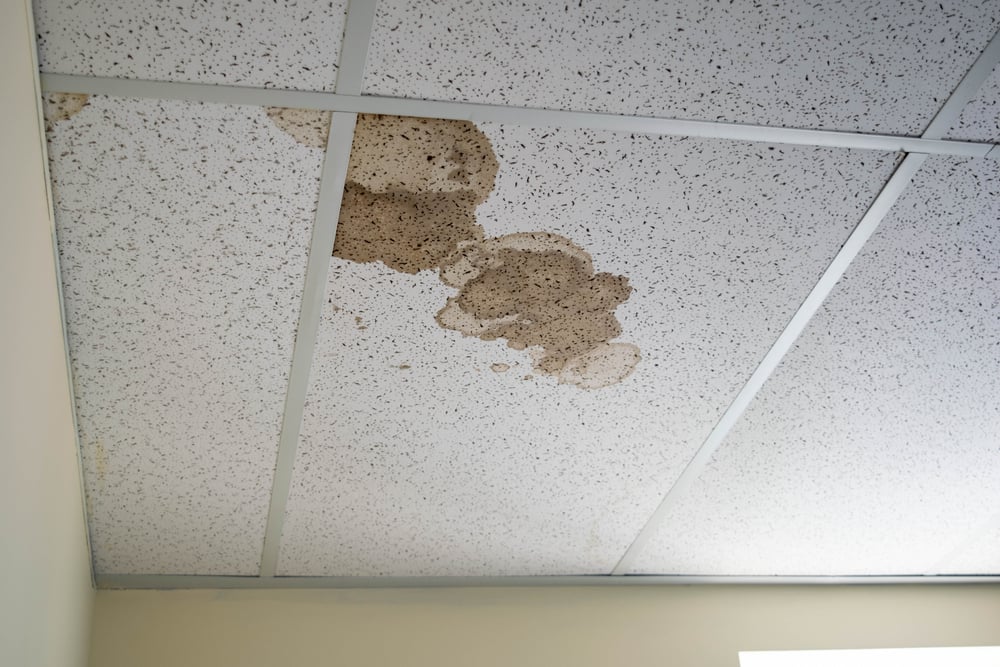
Water damage is one of the most common causes of brown ceiling stains. Water can enter a commercial ceiling system through roof leaks, plumbing problems, sprinkler lines, or mechanical equipment located above the ceiling. A leaking pipe or roof may initially produce only a small discolored area. If the moisture continues, however, the stain can expand and the tile may become soft, warped, sagging, or structurally damaged.
EPA guidance identifies roof leaks, plumbing failures, condensation, and other moisture sources as potential contributors to moisture problems in commercial buildings. If a stain appears suddenly or becomes darker over time, it is worth investigating the area above the ceiling before simply cleaning or replacing the tile.
2. HVAC Condensation
HVAC systems are another potential source of ceiling tile discoloration. Cold ducts, pipes, diffusers, or mechanical components can develop condensation when warm, humid air comes into contact with cold surfaces. Over time, repeated condensation can affect nearby ceiling tiles and create yellow, brown, or damp-looking areas. Staining around HVAC diffusers or mechanical equipment may therefore require more than routine cleaning. If the same area becomes stained again after cleaning or tile replacement, facility managers should investigate HVAC performance, insulation, ventilation, and moisture conditions.
3. High Humidity
Not every moisture-related stain comes from a visible leak. High indoor humidity can contribute to condensation and create an environment where ceiling materials are more likely to develop moisture-related problems. This can be especially important in humid climates and in commercial spaces such as restaurants, gyms, kitchens, healthcare facilities, and industrial buildings.
The EPA recommends maintaining indoor relative humidity below 60%, ideally between 30% and 50%, and performing regular building and HVAC inspections and maintenance to help control moisture and condensation. These practices can help reduce conditions that contribute to recurring moisture-related commercial ceiling tile stains. .
4. Dust and Airborne Debris
Some discolored ceiling tiles are caused by everyday dust rather than water damage. Suspended ceiling tiles can collect airborne particles, particularly in high-traffic areas or spaces with significant air movement.
Tiles around vents, return-air grilles, and HVAC diffusers may develop a gray or dingy appearance as dust accumulates. When the tiles remain structurally sound and the discoloration is primarily surface contamination, professional ceiling cleaning may restore their appearance without requiring complete replacement.
5. Smoke, Soot, and Other Contaminants
Smoke and soot can leave dark or yellowish marks on ceiling tiles. Commercial buildings exposed to cooking emissions, combustion byproducts, industrial processes, or other airborne contaminants may experience this type of discoloration. In these situations, cleaning may improve the appearance, but the building’s ventilation and filtration systems should also be evaluated. Removing the visible residue without addressing the source can allow the problem to return.
What Do Different Ceiling Tile Stains Mean?
The appearance and location of a stain can provide useful clues about its potential cause. However, these signs are not a definitive diagnosis. Recurring, extensive, or moisture-related discoloration should be professionally evaluated.
| Ceiling Tile Appearance | Possible Cause | Recommended Action |
| Brown or yellow ring | Water leak or previous moisture | Inspect for water intrusion |
| Gray or dusty appearance | Dust and airborne particles | Consider professional cleaning |
| Dark discoloration | Smoke, soot, contaminants, or moisture | Investigate the source |
| Staining around HVAC vents | Condensation or airborne contaminants | Inspect HVAC conditions |
| Greasy or yellow buildup | Cooking or industrial contaminants | Evaluate ventilation and cleaning needs |
| Recurring stain | Ongoing leak or condensation | Correct the underlying moisture source |
A stain that appears in one isolated location may require a different response from widespread discoloration across an entire ceiling system. The condition of the tile itself should also influence the decision between cleaning and replacement.
Can Stained Ceiling Tiles Be Cleaned?
In many cases, stained drop ceiling tiles can be cleaned if the discoloration is caused by surface-level dust or certain airborne contaminants. However, the appropriate cleaning method depends on the ceiling material and manufacturer recommendations.
Armstrong notes that different ceiling products require different cleaning methods and recommends using as little water as possible when cleaning mineral fiber and fiberglass ceilings. Its commercial cleaning guidance also states that these ceiling products should not be soaked in water or other liquids.
Professional ceiling cleaning can be particularly useful when a large commercial space has accumulated dust and surface contaminants. When ceiling tiles remain structurally sound, appropriate cleaning may help improve their appearance without requiring unnecessary replacement. However, cleaning is not always the right solution. Armstrong recommends considering replacement when ceiling products are damaged, water stained, or discolored, while the EPA notes that porous materials such as ceiling tiles may need to be discarded when they become moldy because mold can be difficult or impossible to remove completely.
When Should You Replace Discolored Ceiling Tiles?
Replacement becomes more appropriate when discoloration is accompanied by physical deterioration or significant moisture damage. Consider replacing a ceiling tile when:
- It is sagging, warped, swollen, or crumbling
- Water has significantly penetrated the material
- The stain repeatedly returns after cleaning
- Visible mold growth is present
- The tile cannot be restored to an acceptable appearance
- The material has lost its structural integrity
- The underlying moisture problem has been corrected but the tile remains damaged
EPA guidance notes that absorbent materials such as ceiling tiles may need to be discarded and replaced when they are moldy or water damaged. For commercial properties, replacement should also take appearance and performance into account. New tiles should match the existing ceiling system as closely as possible in size, texture, color, edge detail, and acoustical characteristics.
Why You Should Fix the Cause Before Replacing the Tile
Replacing a stained ceiling tile without correcting the underlying problem can result in repeated damage. For example, if a roof leak remains active, a replacement tile may become stained again. If HVAC condensation is responsible, installing a new tile will not solve the moisture problem. Similarly, excessive indoor humidity can continue affecting additional tiles throughout the facility. This is why a proper assessment should look beyond the visible stain. Facility managers should determine whether the problem is isolated or widespread and inspect areas above the ceiling when appropriate. The goal should be to solve the cause, not simply hide the symptom.
How to Prevent Ceiling Tile Discoloration
Preventive maintenance can reduce the likelihood of recurring ceiling tile stains. It also helps facility managers identify problems before they become expensive repairs. A consistent maintenance routine can protect the appearance and condition of the entire ceiling system.
Schedule Regular Ceiling Inspections
Include ceiling tiles, grid systems, vents, and visible areas around HVAC equipment in routine facility inspections. Pay attention to new stains, sagging tiles, discoloration, or other visible changes. Early inspections can help identify leaks or moisture problems before they affect a larger section of the ceiling.
Control Indoor Humidity
Maintaining appropriate humidity levels can reduce condensation and moisture-related problems. The EPA recommends keeping indoor relative humidity below 60%. Monitoring humidity levels can help facility managers identify conditions that may contribute to recurring ceiling tile discoloration.
Maintain HVAC Equipment
Regular HVAC maintenance can help identify condensation, drainage, insulation, and ventilation issues before they affect ceiling materials. Well-maintained HVAC equipment can also support better temperature and humidity control throughout the building. Addressing these issues early can help prevent moisture from reaching ceiling tiles and causing repeated stains.
Address Leaks Quickly
Roof, plumbing, sprinkler, and mechanical leaks should be addressed as soon as they are identified. Delaying repairs can allow moisture to spread and increase the amount of damaged material.
Schedule Professional Ceiling Cleaning
Routine commercial ceiling cleaning can remove accumulated dust and airborne contaminants while helping maintain a professional appearance. Professional cleaning can also make it easier for facility teams to identify new stains and damaged tiles during ongoing maintenance.
Clean or Replace Ceiling Tiles?
The decision ultimately depends on the cause of the discoloration and the condition of the tile. If a ceiling tile is structurally sound and the discoloration is primarily surface-level dirt, dust, or removable contaminants, professional cleaning may be the most practical option. Cleaning can improve appearance while allowing the existing ceiling system to remain in service.
If the tile is water damaged, sagging, deteriorated, or affected by mold, replacement may be more appropriate. Most importantly, the source of moisture should be corrected before replacement takes place. A professional assessment can help facility managers determine whether cleaning, replacement, or additional building maintenance is the appropriate solution.
Best Commercial Ceiling Contractor in Houston
Commercial ceiling systems contribute to building appearance, indoor air quality, acoustic performance, and overall occupant comfort. From the initial design to professional installation and ongoing cleaning, every stage plays an important role in maximizing ceiling performance and protecting your investment. Working with one experienced commercial ceiling contractor simplifies project management, improves communication, and helps ensure your ceiling continues to perform as intended for years to come.
As a Houston-based commercial ceiling contractor with over 20 years of experience, Ceil Tex works with property owners, facility managers, contractors, and business leaders to design, install, and maintain commercial ceiling systems that meet their operational goals. Unlike companies that focus on only one part of the process, Ceil Tex provides a complete commercial ceiling solution with expert design, professional installation, and ongoing cleaning services all from one experienced team. Our team delivers complete ceiling solutions that help businesses improve workplace appearance, extend ceiling life, and simplify long-term facility management.
Planning a commercial ceiling project or looking for a trusted partner to maintain your existing ceiling system? Contact us today to schedule a professional consultation. Our experienced team can evaluate your facility, recommend practical solutions, and provide the complete design, installation, and cleaning services your building needs.