A commercial ceiling does more than improve a facility’s appearance. The right system can enhance acoustics, conceal HVAC and electrical components, and simplify maintenance. The U.S. ceiling tiles market was valued at approximately $2.49 billion in 2025, reflecting continued demand for ceiling systems across commercial and non-residential spaces.
While DIY may work for a small residential project, commercial ceiling work involves larger spaces, suspended systems, specialized materials, mechanical components, and strict project requirements. If you’re deciding between DIY and professional service, these seven signs can help you determine when it’s time to call a commercial ceiling contractor.
Key Takeaways
- Complex ceiling systems require precise planning and installation
- Overhead HVAC, electrical, and plumbing can complicate installation
- Uneven grids and misaligned tiles can affect appearance and performance
- Professional installation helps minimize disruption and costly mistakes
- Experienced contractors can select, install, and maintain the right system
1. Your Project Involves a Large Commercial Space
The size of a commercial ceiling project is one of the clearest indicators that professional installation may be the better choice. Installing a handful of ceiling tiles in a small room is very different from installing a complete ceiling system across an office, retail location, school, restaurant, healthcare facility, warehouse, or other commercial property.
Large projects require more than simply placing tiles into a grid. The installer must establish accurate measurements, determine the layout, account for walls and structural features, plan perimeter cuts, coordinate openings for lighting and mechanical equipment, and maintain consistent alignment across the entire space. A small layout error at the beginning can become increasingly noticeable as the installation progresses.
Managing these variables requires careful planning and coordination throughout the installation process. Addressing layout, materials, and existing building systems in advance can help prevent costly rework and ensure a clean, properly finished ceiling. For facility managers, the benefit is not simply saving time on installation. It is having a ceiling system installed with a consistent layout and professional finish across the entire project.
2. You Need a Suspended, Drop, or Acoustic Ceiling System
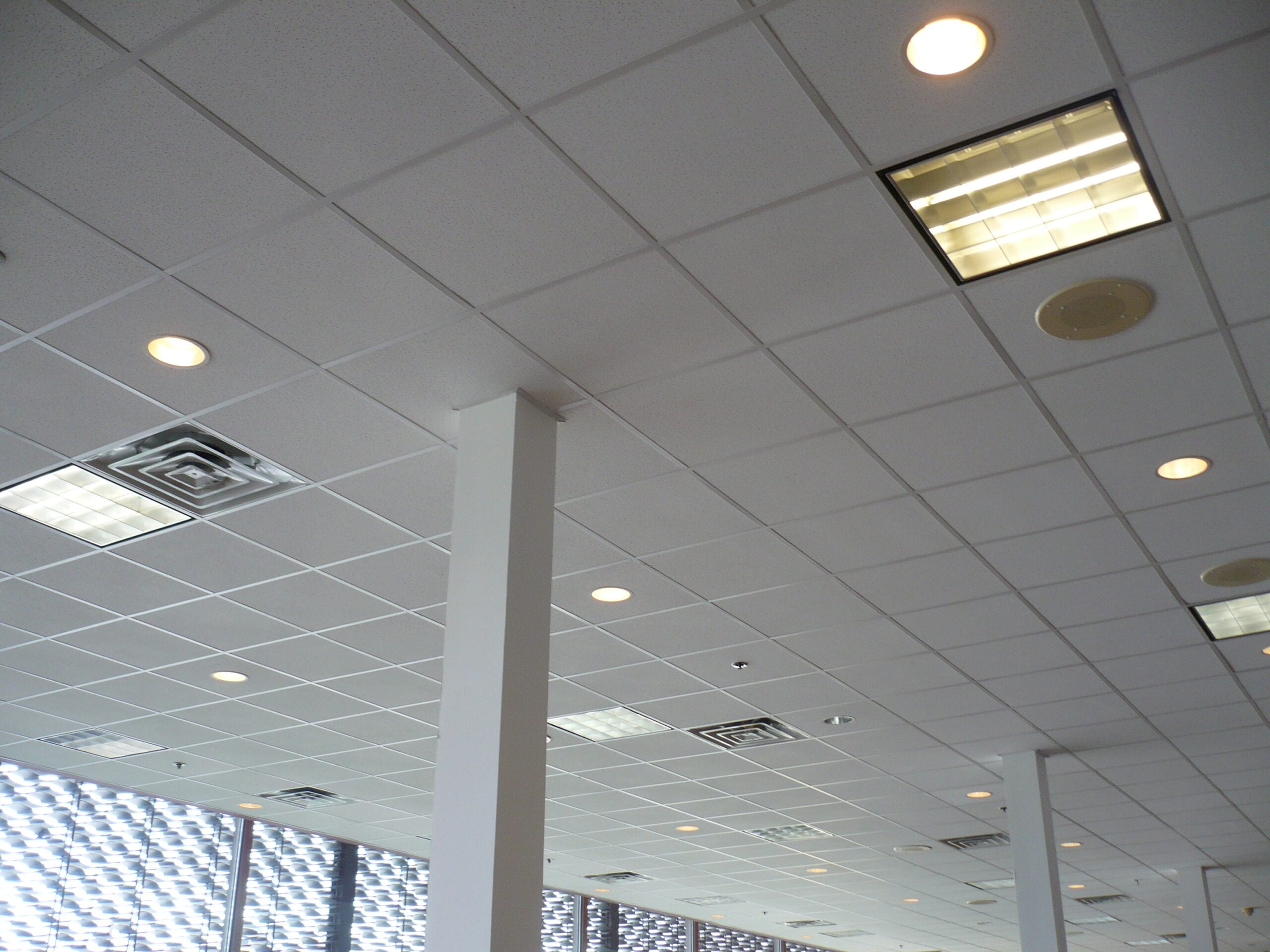
A commercial suspended or drop ceiling may look simple once finished, but several components work together behind the surface. Each part must be properly planned and installed to create a stable, functional, and professional-looking ceiling. Installation typically involves:
- Ceiling grid and suspension components
- Accurate tile placement and alignment
- Perimeter details and wall connections
- Coordination with HVAC, electrical, plumbing, and lighting
- Access to utilities above the ceiling
- Proper tile selection for the space’s acoustic and performance needs
Acoustic ceiling systems require additional consideration because tile selection can affect sound absorption and occupant comfort. Suspended systems also need to provide practical utility access while maintaining a clean, finished appearance. If your project involves a complete grid-and-tile system rather than a simple surface finish, professional installation can help ensure the components work together properly and reduce installation issues.
3. HVAC, Electrical, Plumbing, or Other Systems Are Above the Ceiling
One of the biggest challenges in commercial ceiling installation is that the ceiling rarely exists by itself. Above a suspended ceiling, there may be ductwork, pipes, electrical wiring, sprinkler systems, lighting, ventilation equipment, and other building infrastructure.
That means the ceiling layout must work around existing systems without compromising accessibility or the finished appearance. Lighting fixtures may need specific openings. HVAC diffusers need to remain accessible and properly positioned. Access panels may need to be incorporated into the layout. Existing components may also limit where grid members or suspension points can be installed.
Trying to manage these considerations without the appropriate experience can create delays, rework, damaged materials, or an uneven finished system. Professional ceiling installation services are designed to account for the conditions above the ceiling while creating a functional and accessible finished space. This is particularly important when renovating an occupied commercial building, where the ceiling work must often be coordinated with ongoing business operations and other trades.
4. Your Existing Ceiling Grid Is Damaged, Uneven, or Outdated
A new ceiling tile installation will not necessarily solve problems with an existing grid. The condition of the grid can directly affect the stability, alignment, and appearance of the finished ceiling. Before replacing tiles, check the condition of the framework underneath.
| Warning Sign | What It May Indicate |
| Uneven grid lines | Misalignment or improper installation |
| Bent or damaged T-bars | Structural damage to the grid |
| Loose components | Weak or unstable connections |
| Corrosion or discoloration | Moisture exposure or deterioration |
| Gaps at intersections | Poor alignment or damaged components |
| Tiles that do not sit correctly | Grid problems or incorrect tile sizing |
Depending on the condition of the grid, repairing individual sections may be enough. If the damage is widespread or the system is outdated, replacing the entire grid may be the better option. A professional assessment can determine whether the existing structure can support the planned installation or whether a more comprehensive solution is needed.
5. Your Building Has Moisture, Heat, or Other Environmental Challenges
Not every ceiling material is appropriate for every commercial environment. A ceiling installed in a standard office may face very different conditions from one installed in a commercial kitchen, restaurant, healthcare facility, or high-humidity space.
Moisture, heat, steam, grease, and repeated exposure to demanding conditions can affect ceiling materials and their long-term performance. Choosing a product simply because it looks good or has a low initial price can create maintenance issues if the material is not suited to the environment.
Commercial kitchens are a good example. Ceil Tex notes that these spaces face high heat, steam, grease buildup, and strict health and fire-safety requirements, which is why ceiling materials for food-service environments need to be selected with those conditions in mind.
Professional installation starts with understanding the environment rather than simply installing whatever tile is already available. An experienced ceiling contractor can help match the ceiling system and materials to the building’s actual operating conditions, maintenance requirements, and design goals.
6. The Ceiling Installation Needs to Minimize Business Disruption
For a commercial property, construction rarely happens in a space. Employees may need to work nearby, customers may continue entering the building, equipment may need to remain operational, and tenants may have schedules that cannot simply be put on hold. That makes project coordination an important part of professional ceiling installation. Key considerations include:
- Scheduling work around business hours and peak activity
- Establishing safe and accessible work areas
- Protecting furniture, equipment, and merchandise
- Coordinating access with employees, tenants, and customers
- Sequencing work to limit disruption to daily operations
- Coordinating ceiling work with HVAC, electrical, and other trades
This matters especially for retail stores, restaurants, offices, schools, and other occupied facilities. The goal is not simply to finish the ceiling but to minimize disruption throughout the project. Careful scheduling and coordination can help the business continue operating as efficiently as possible.
7. You Need the Installation Done Right the First Time
Perhaps the strongest reason to hire a professional is simple: commercial ceiling installation is an investment, and mistakes can become expensive when they have to be corrected after the project is finished.
Poor planning can lead to uneven layouts, excessive material waste, visible gaps, damaged tiles, misaligned grids, difficult access to utilities, or a finished ceiling that does not match the intended design. Correcting those problems can mean additional labor, replacement materials, scheduling complications, and more disruption to the facility.
Professional installation provides a structured process from site evaluation through final inspection. Ceil Tex’s commercial ceiling services include on-site consultation, design and planning, professional installation, and inspection, helping ensure that the finished system meets the project’s requirements. That experience becomes particularly valuable when the project involves multiple ceiling types, large square footage, complex layouts, specialty materials, or coordination with other building systems.
What to Look for in a Commercial Ceiling Installation Contractor
Choosing the right contractor is just as important as deciding to hire one. Start by looking for a company with direct experience in commercial ceiling projects rather than relying solely on general construction experience.
Ask potential contractors about their experience with the type of ceiling system you need, the environments they typically serve, their installation process, material brands, project scheduling, inspections, and post-installation support. It is also worth asking whether they provide related repair, replacement, and cleaning services, since having one experienced team available for future maintenance can simplify facility management.
A contractor that understands the complete lifecycle of a ceiling system can help you make decisions that account for both immediate installation requirements and long-term maintenance. Ceil Tex offers installation across multiple commercial ceiling categories, including acoustic, decorative, drop, suspended, waterproof, and ceiling grid systems. We provide replacement, cleaning, and high-dusting services, giving commercial clients access to ongoing ceiling support after installation.
Professional Installation Can Protect the Entire Ceiling Investment
A commercial ceiling is a long-term investment that affects both the appearance and functionality of your facility. The quality of the installation can also influence its durability, maintenance needs, and overall performance. A professional installation can help ensure the system:
- Works properly with HVAC, electrical, plumbing, and other building systems
- Supports the needs of employees, customers, and other occupants
- Handles the conditions of the commercial environment
- Remains accessible and practical to maintain
- Is properly installed across large or complex areas
- Addresses challenges with suspended, acoustic, or specialty ceiling systems
- Reduces the risk of installation problems and costly rework
- Supports long-term repair, maintenance, and ceiling performance
Choosing the right installation approach can make a significant difference in how well your ceiling performs over time. Proper material selection, installation, inspection, and maintenance can help prevent recurring problems and unnecessary expenses. A well-installed ceiling can remain functional, attractive, and easier to maintain for years.
Best Commercial Ceiling Contractor in Houston
Commercial ceiling systems contribute to building appearance, indoor air quality, acoustic performance, and overall occupant comfort. From the initial design to professional installation and ongoing cleaning, every stage plays an important role in maximizing ceiling performance and protecting your investment. Working with one experienced commercial ceiling contractor simplifies project management, improves communication, and helps ensure your ceiling continues to perform as intended for years to come.
As a Houston-based commercial ceiling contractor with over 20 years of experience, Ceil Tex works with property owners, facility managers, contractors, and business leaders to design, install, and maintain commercial ceiling systems that meet their operational goals. Unlike companies that focus on only one part of the process, Ceil Tex provides a complete commercial ceiling solution with expert design, professional installation, and ongoing cleaning services all from one experienced team. Our team delivers complete ceiling solutions that help businesses improve workplace appearance, extend ceiling life, and simplify long-term facility management.
Planning a commercial ceiling project or looking for a trusted partner to maintain your existing ceiling system? Contact us today to schedule a professional consultation. Our experienced team can evaluate your facility, recommend practical solutions, and provide the complete design, installation, and cleaning services your building needs.