Houston summers are extremely hot and humid, and cooling commercial buildings can be expensive. According to the U.S. Energy Information Administration (EIA), HVAC systems account for roughly 40% of total energy use in U.S. commercial buildings, with cooling demand becoming especially significant in hot climates like Houston, where it can be several times higher than in colder regions. This makes heat control a major concern for property owners and facility managers.
Suspended ceilings offer a practical way to reduce heat gain, improve comfort, and lower energy costs without major structural changes. These systems are not just design features. They create a hidden layer that supports insulation and improves HVAC performance. In a city like Houston, where air conditioning systems run for long hours, even small efficiency improvements can lead to major savings over time.
Key Takeaways
- Suspended ceilings create an air gap that reduces heat transfer
- They improve HVAC efficiency and lower energy bills
- Thermal ceiling tiles help stabilize indoor temperatures
- They reduce long-term maintenance and extend system life
- Proper installation is essential for maximum performance
Understanding Suspended Ceilings
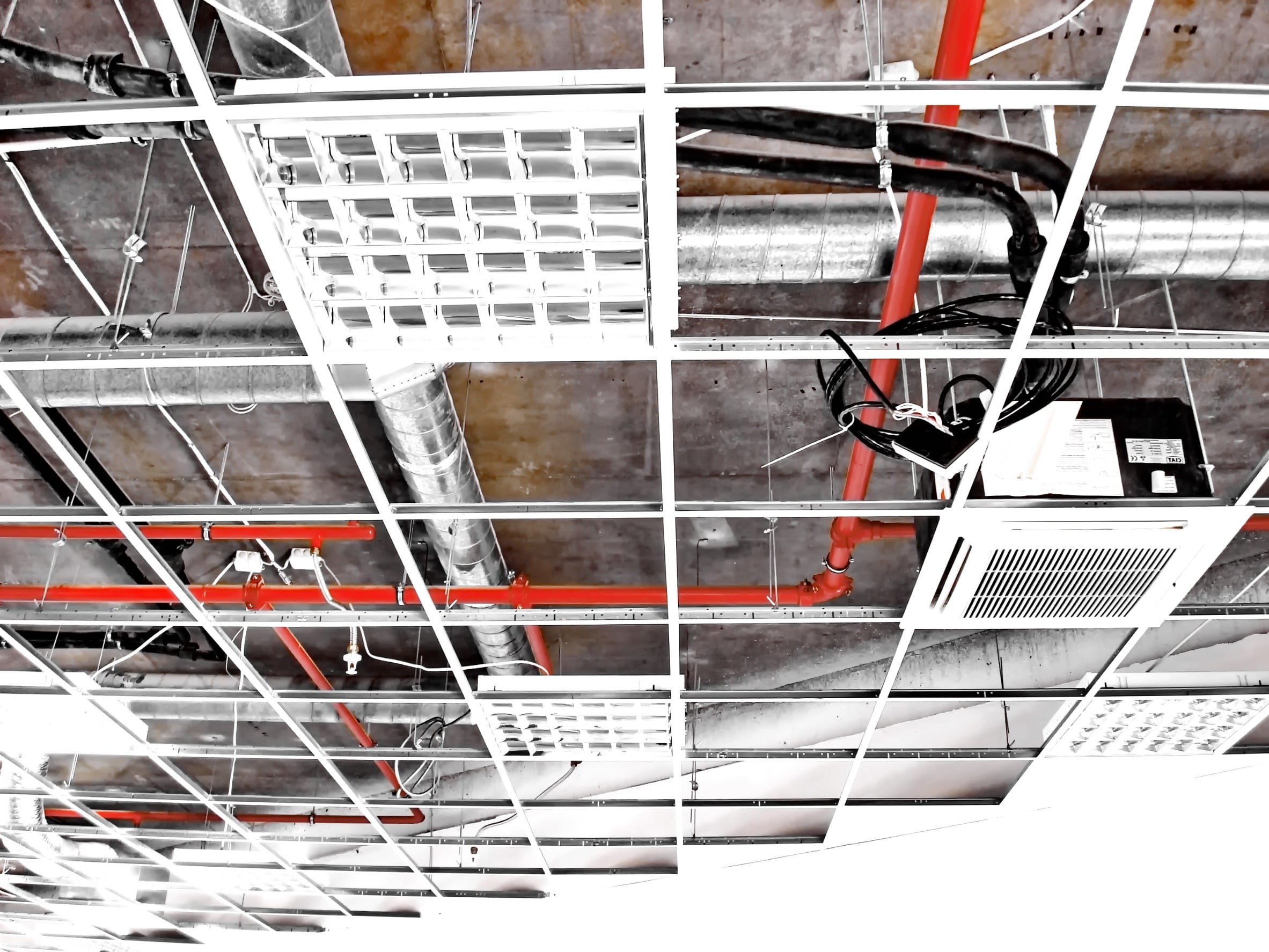
Suspended ceilings, also called drop ceilings, are installed below the main structural ceiling. They use a metal grid system that holds lightweight ceiling tiles or panels. This design creates a hidden space between the two ceilings that helps manage heat, wiring, and air systems and also improves drop ceiling acoustic insulation that helps reduce noise and improve thermal comfort in commercial environments like offices and retail spaces.
This air gap is one of the main reasons suspended ceilings are effective in hot climates. It slows down heat transfer from the roof into occupied spaces. It also makes it easier to access pipes, ducts, and electrical systems without major repair work. Suspended ceilings are widely used in offices, schools, hospitals, and retail spaces. They offer a balance of function, comfort, and design flexibility for modern commercial buildings.
How Suspended Ceilings Reduce Heat in Buildings
Suspended ceilings help control indoor temperature by adding an extra insulation layer. The space between the structural ceiling and the drop ceiling acts like a buffer zone. This buffer reduces how much heat enters the occupied area below. They also work with ceiling tiles that have thermal resistance properties. These tiles slow down heat transfer and help maintain a cooler indoor environment during peak summer heat. In Houston buildings, this means air conditioners do not need to work as hard to maintain comfort. That leads to more stable indoor temperatures and improved energy efficiency.
Energy Efficiency and HVAC Performance
One of the biggest advantages of suspended ceilings is improved HVAC performance. When heat transfer is reduced, air conditioning systems cycle less frequently. This lowers energy consumption and reduces system strain. Over time, this can extend the life of HVAC equipment and reduce repair costs. It also supports more consistent airflow throughout the building.
Benefits for HVAC systems include:
- Reduced cooling load during peak summer months
- Improved temperature control across rooms
- Lower wear and tear on mechanical systems
- More consistent indoor comfort for occupants
By creating an additional barrier between occupied spaces and the roof structure, suspended ceilings help maintain a more stable indoor environment throughout the year. This added thermal control minimizes temperature fluctuations, allowing HVAC systems to operate more efficiently and effectively. For commercial facilities, schools, healthcare buildings, and industrial spaces, these energy-saving benefits can contribute to lower operating costs while improving overall occupant comfort.
Insulation and Comfort Benefits
Suspended ceilings improve both thermal and acoustic insulation. This makes indoor environments cooler and quieter, which is important for productivity in offices and learning environments. By blocking heat from the roof structure, ceiling systems help maintain steady indoor temperatures, reducing hot and cold spots that are common in large commercial buildings. They also absorb sound, which reduces noise from HVAC systems, foot traffic, and equipment. In fact, sound-insulation ceiling tiles can provide significant benefits in spaces where noise control is a priority, helping create a more comfortable and productive environment. This improves overall comfort for employees, customers, and visitors.
Cost Savings Over Time
While suspended ceilings require an initial investment, they offer long-term savings. Reduced energy use is the most direct financial benefit. Lower HVAC strain also means fewer maintenance calls and longer system life. Additional savings come from easier building access. Workers can reach wiring, ducts, and pipes without major construction work. This reduces downtime and repair costs.
Overall financial benefits include:
- Lower monthly energy bills
- Reduced HVAC maintenance costs
- Longer equipment lifespan
- Increased property value over time
Practical Tips for Installation in Houston Buildings
Installing suspended ceilings correctly is important for performance and safety. In Houston’s hot and humid climate, material selection matters even more. Choosing moisture-resistant ceiling tiles and corrosion-resistant grid systems can help prevent sagging, staining, and premature deterioration caused by humidity. Proper installation by experienced professionals also ensures the ceiling system meets local building codes and delivers long-term durability, energy efficiency, and aesthetic appeal.
Follow these best practices:
- Choose moisture-resistant ceiling tiles for humidity control
- Ensure proper ceiling height for airflow and comfort
- Work with experienced commercial contractors
- Match ceiling systems with HVAC design plans
- Schedule regular inspections to prevent damage or sagging
Good installation ensures the system performs efficiently for many years. It also helps maintain the ceiling’s structural integrity, reducing the likelihood of future maintenance issues or costly repairs. Regular inspections and prompt replacement of damaged components can further extend the lifespan of the system and preserve its performance over time.
Suspended Ceiling Performance Comparison
When evaluating building improvements, it is helpful to compare how suspended ceilings affect overall building performance. The table below highlights several key areas where suspended ceiling systems can contribute to greater efficiency, comfort, and ease of maintenance compared to spaces without a suspended ceiling installation.
| Feature | With Suspended Ceiling | Without Suspended Ceiling |
| Heat Control | Improved insulation and reduced heat transfer | Higher heat gain from the roof |
| Energy Bills | Lower cooling costs | Higher HVAC energy use |
| HVAC Load | Reduced system strain | Increased system workload |
| Comfort Level | More stable indoor temperature | Uneven heating and cooling |
| Maintenance Access | Easy access to utilities | More difficult repairs |
While the specific results will vary depending on the building design, ceiling materials, and HVAC system, suspended ceilings often provide measurable benefits in both operational efficiency and occupant comfort. For Houston property owners dealing with intense heat and humidity, these advantages can translate into lower energy expenses, improved indoor conditions, and easier long-term building maintenance.
Best Suspended Ceiling Contractor in Houston
Suspended ceiling systems affect long-term building appearance, acoustic performance, accessibility, and energy efficiency. The right ceiling materials and installation methods must support sound control, structural stability, fire safety requirements, and overall building performance. Proper installation within commercial and residential environments is critical for maintaining durability and reducing future maintenance issues.
As a Houston-based commercial ceiling systems provider with over 20 years of experience, Ceil Tex works with contractors, designers, facility managers, and property owners to evaluate ceiling system requirements, acoustic performance, material selection, and code compliance. Our team focuses on suspended ceiling systems that are installed correctly and designed to perform reliably for years.
Are you planning to install or upgrade a suspended ceiling system in Houston? Contact us for expert guidance. A professional evaluation helps you select the right ceiling materials, maintain compliance with building standards, and avoid costly installation problems while protecting long-term building performance.