Keeping a commercial building clean involves much more than floors, windows, and restrooms. Ceiling systems are an important part of overall facility maintenance, but are often overlooked during routine cleaning schedules. Regular ceiling care helps protect the appearance, safety, and performance of commercial spaces.
According to the International Facility Management Association (IFMA), preventive maintenance helps reduce operating costs while extending the lifespan of building assets. Regular inspections and cleaning programs allow facility managers to identify problems early and avoid costly repairs. Since ceilings collect dust, stains, moisture, and other contaminants over time, they should be included in every commercial maintenance plan.
Key Takeaways
- Regular ceiling inspections help identify damage before it becomes expensive
- Cleaning schedules should match the building type and level of use
- Water stains, mold, and damaged ceiling tiles require quick attention
- Professional ceiling cleaning helps extend the lifespan of ceiling systems
- Preventive maintenance supports cleaner and healthier commercial spaces
Why Commercial Ceiling Cleaning Matters
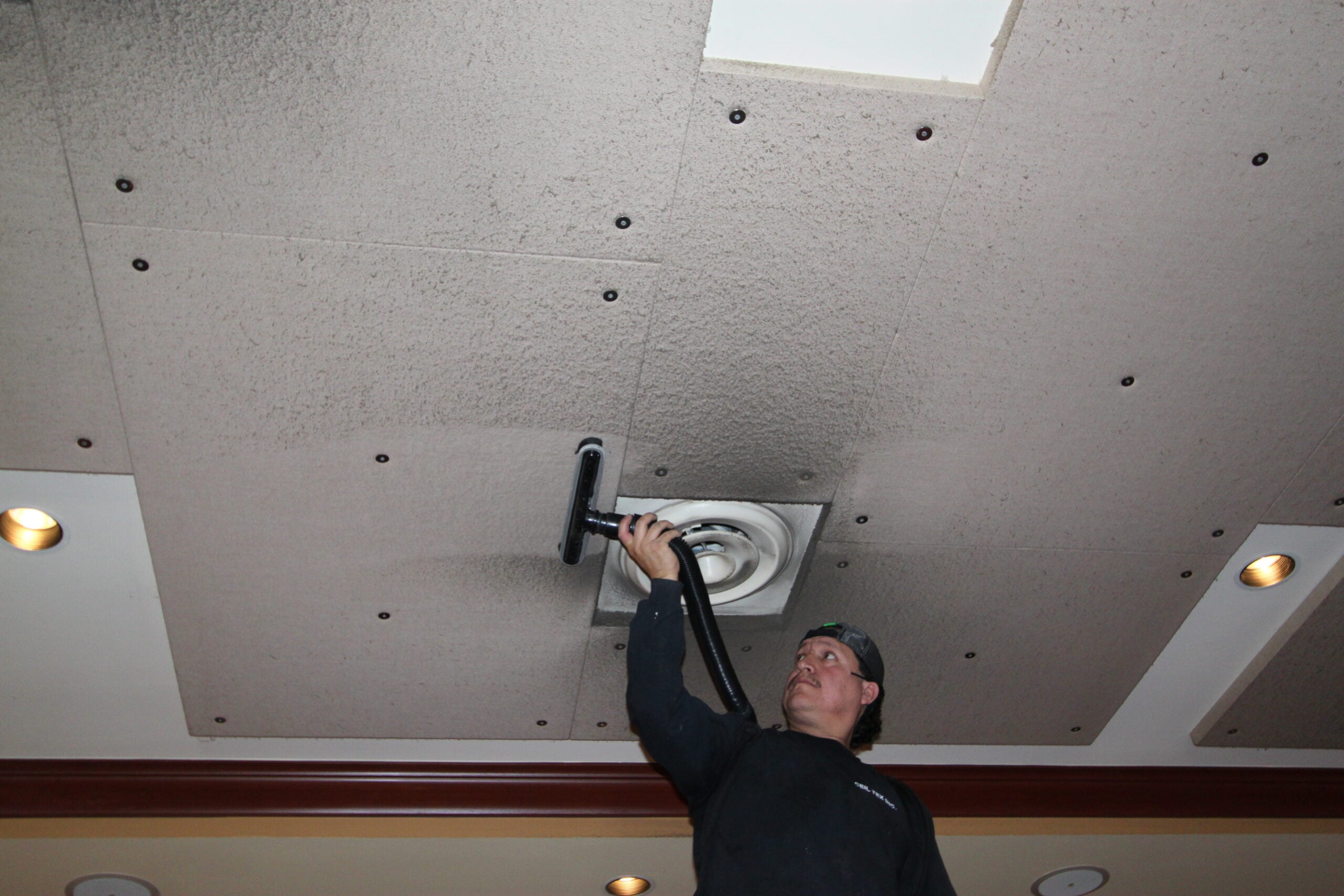
Many facility managers focus on floors, restrooms, HVAC systems, and high-touch surfaces while ceiling maintenance receives less attention. However, ceilings are constantly exposed to airborne dust, moisture, grease, and other particles that slowly affect their appearance and performance. A dirty ceiling can create a poor impression for employees, customers, and visitors. It may also contribute to indoor air quality concerns when dust and debris collect near ventilation systems or circulate throughout the building. Regular ceiling cleaning and high dusting help remove buildup from hard-to-reach areas and protect the overall condition of commercial ceiling systems, especially in large facilities where routine maintenance can be challenging.
Regular commercial ceiling cleaning helps:
- Improve workplace appearance
- Reduce dust buildup
- Support better indoor air quality
- Protect ceiling materials
- Maintain acoustic performance
- Extend ceiling lifespan
- Identify maintenance issues early
Including ceiling care in a preventive maintenance plan helps businesses maintain a cleaner environment while reducing unexpected repair costs. It also allows facility teams to identify potential issues earlier and address them before they impact daily operations. A consistent maintenance routine helps protect the building’s appearance, safety, and long-term value.
Commercial Ceiling Cleaning Checklist
Rather than waiting until the ceiling tiles look dirty, facility managers should complete regular inspections throughout the year. Routine checks make it easier to identify small issues before they become larger maintenance problems. A consistent inspection schedule also helps extend the lifespan of commercial ceiling systems.
1. Inspect Ceiling Tiles for Damage
Start every ceiling inspection by looking for visible signs of damage. Small changes in ceiling condition can point to larger building issues that need attention. Regular inspections help facility managers track ceiling performance and address concerns before they become more serious problems.
Check for:
- Water stains
- Sagging tiles
- Cracks
- Missing tiles
- Discoloration
- Broken edges
- Surface damage
Even minor damage may indicate hidden plumbing leaks, roof problems, or HVAC issues that should be addressed quickly. Identifying these problems early can help prevent additional ceiling damage and reduce repair costs. Facility managers should document any changes and schedule repairs as soon as possible.
2. Check for Dust and Dirt Buildup
Ceiling tiles naturally collect dust because they are exposed to airborne particles every day. Over time, this buildup can make ceilings appear aged, dirty, or poorly maintained. Regular cleaning helps preserve the appearance of ceiling systems while preventing dust and debris from affecting the overall cleanliness of the facility.
During inspections, pay attention to:
| Area | What to Check |
| Ceiling tiles | Dust, stains, and discoloration |
| HVAC vents | Dirt buildup and airflow concerns |
| Light fixtures | Reduced brightness from dust |
| Ceiling grids | Dirt around tile edges |
| Exposed ceilings | Dust on beams, pipes, and ductwork |
Regular cleaning helps maintain a professional appearance while reducing the amount of dust throughout the facility. It also supports a healthier indoor environment by limiting the buildup of airborne particles on ceiling surfaces. Consistent ceiling maintenance helps create a cleaner, more comfortable space for employees and visitors.
3. Look for Moisture Problems
Moisture is one of the biggest threats to commercial ceiling systems. Water leaks and condensation can damage ceiling tiles quickly and may lead to mold growth if left untreated. Addressing moisture issues early helps prevent further damage, protects building materials, and reduces the need for costly repairs or replacements.
Facility managers should look for:
- Brown or yellow stains
- Soft ceiling tiles
- Musty odors
- Mold growth
- Peeling surfaces
- Water marks near HVAC equipment
Moisture issues should always be corrected before cleaning or replacing affected ceiling materials. Fixing the source of the problem helps prevent repeated damage and protects the building from future maintenance issues.
4. Focus on High-Risk Areas
Some areas collect dirt and contaminants faster than others. These locations usually require more frequent inspections and cleaning. Identifying high-risk areas helps facility managers create a more effective maintenance schedule and keep the entire building looking clean and well-maintained.
Common high-maintenance areas include:
- Building entrances
- Kitchens and break rooms
- Healthcare spaces
- Warehouses
- Manufacturing areas
- Restrooms
- Loading areas
Facilities with heavy traffic or higher exposure to dust, grease, and moisture often benefit from more frequent ceiling maintenance schedules. Cleaning these areas on a regular basis helps preserve ceiling materials, improve appearance, and reduce the risk of long-term damage.
How Often Should Commercial Ceilings Be Cleaned?
Not every commercial building needs the same cleaning frequency. The right schedule depends on factors such as building use, occupancy levels, environmental conditions, and the type of ceiling system installed. Creating a customized maintenance plan helps ensure ceilings receive proper care without unnecessary cleaning expenses.
A general guideline includes:
| Facility Type | Recommended Cleaning Frequency |
| Office buildings | Every 6–12 months |
| Healthcare facilities | Every 3–6 months |
| Restaurants | Every 3–6 months |
| Schools | Every 6 months |
| Warehouses | Every 6–12 months |
| Manufacturing facilities | Every 3–6 months |
Buildings with higher levels of dust, humidity, or airborne contaminants may require more frequent professional cleaning. These conditions can cause ceiling tiles to become dirty faster and may impact the overall appearance and cleanliness of the facility. A customized cleaning schedule helps address specific building needs while protecting ceiling performance over time.
Areas Often Missed During Ceiling Maintenance
Ceiling cleaning involves more than wiping visible ceiling tiles. Many important areas collect dust but are overlooked during routine maintenance. Addressing these hidden areas helps maintain a more complete cleaning process and keeps the entire ceiling system looking consistent and well-maintained.
Commonly missed areas include:
- Ceiling grids
- Air diffusers
- Light fixtures
- Sprinkler heads
- Ceiling-mounted equipment
- Exposed beams
- Ductwork
Cleaning these areas improves the overall appearance of the facility and helps create a more consistent maintenance standard throughout the building. It also reduces hidden dust buildup and supports a cleaner environment for employees, customers, and visitors. Regular attention to these areas helps maintain the long-term condition of commercial ceiling systems.
Should You Clean or Replace Commercial Ceiling Tiles?
Cleaning can restore many ceiling systems, but not every tile can be saved. Facility managers should evaluate the condition of ceiling materials before deciding whether cleaning or replacement is the better option. Understanding the difference between cleaning and replacing ceiling tiles can help businesses make a more cost-effective maintenance decision. A professional assessment can help determine the most practical solution based on the condition of the ceiling system.
Cleaning may be effective for:
- Dust buildup
- Light stains
- Surface discoloration
- Smoke residue
- Minor grease buildup
Replacement may be needed for:
- Severe water damage
- Mold contamination
- Broken tiles
- Sagging materials
- Structural deterioration
Choosing the right solution helps businesses avoid unnecessary replacement costs while maintaining a clean and professional workplace. Evaluating the condition of ceiling tiles before making a decision ensures that resources are used effectively and the best long-term option is selected. A proper maintenance approach can help preserve ceiling performance while supporting the overall appearance of the facility.
Benefits of Professional Commercial Ceiling Cleaning
Professional cleaning offers several advantages for commercial properties. Experienced technicians use proper equipment and methods to protect ceiling materials while removing dirt and buildup. This approach helps maintain cleaner, longer-lasting ceiling systems.
Extends Ceiling Life
Regular cleaning removes contaminants that can damage ceiling materials over time. Maintaining ceiling tiles properly can delay replacement and reduce long-term maintenance costs. A consistent cleaning schedule also helps preserve the appearance, performance, and overall condition of commercial ceiling systems.
Improves Workplace Appearance
Clean ceilings help create a brighter and more professional environment. This improves the experience for employees, customers, and visitors. Maintaining a clean ceiling system also supports a positive workplace image and shows attention to detail throughout the facility.
Supports Indoor Air Quality
Dust and debris collected on ceiling systems can affect overall cleanliness. Professional cleaning helps reduce buildup and supports a healthier indoor environment. Regular ceiling maintenance also helps prevent excessive dust accumulation and keeps commercial spaces more comfortable for occupants.
Helps Identify Maintenance Problems
During cleaning, professionals can often identify damaged tiles, leaks, or other issues that may require attention. Finding these problems early helps prevent larger repairs.
Best Practices for Facility Managers
A strong ceiling maintenance program combines routine inspections with scheduled cleaning. Taking a proactive approach helps protect building assets and keeps commercial spaces looking their best.
Facility managers should:
- Schedule regular ceiling inspections
- Document cleaning and repair dates
- Address water leaks immediately
- Replace damaged tiles quickly
- Coordinate ceiling cleaning with other maintenance tasks
- Review ceiling conditions during annual facility assessments
Consistent maintenance helps extend ceiling performance while keeping commercial spaces clean and presentable throughout the year. A proactive approach allows facility managers to address issues before they affect employees, customers, or daily operations. Regular ceiling care also supports a more professional and comfortable workplace environment.
Best Commercial Ceiling Cleaning Contractor in Houston
Commercial ceiling systems contribute to building appearance, indoor air quality, acoustic performance, and overall occupant comfort. Over time, dust, stains, grease, and moisture can reduce the appearance and performance of ceiling tiles, making regular cleaning an important part of facility maintenance. Scheduling professional ceiling cleaning at the right time helps preserve ceiling materials, maintain a professional environment, and reduce the need for premature replacement.
As a Houston-based commercial ceiling contractor with over 20 years of experience, Ceil Tex works with property owners, facility managers, contractors, and business leaders to evaluate ceiling conditions, identify cleaning needs, and recommend practical maintenance solutions. Our team specializes in commercial ceiling cleaning services that help extend ceiling life, improve workplace appearance, and support healthier indoor environments.
Are your commercial ceilings showing signs of dust, stains, or discoloration? Contact us today for a professional evaluation. Our experienced team can assess your ceiling system, recommend the right cleaning solution, and help restore the appearance and performance of your commercial space.