Trying to focus can be hard when noise comes from the ceiling above. You may hear footsteps or conversations. Many offices deal with this problem. Sound can travel through ceilings and open spaces. When that happens, people lose focus.
Acoustic ceiling insulation helps solve this problem. It absorbs sound and slows how noise moves through a building. This helps create a quieter and more comfortable workspace.
But how does ceiling acoustic insulation reduce noise? To understand this, it helps to see how sound moves through buildings.
Key Takeaways
- Acoustic ceiling insulation absorbs sound and reduces both airborne and impact noise
- Installing insulation in drop ceilings improves overall sound control and limits noise transfer between rooms and floors
- It reduces echo and reverberation, making speech clearer in large or open spaces
- Quieter workspaces support better focus, communication, and employee comfort
- Acoustic insulation also provides fire resistance, energy efficiency, and long-term building value
What Is Acoustic Ceiling Insulation?
Acoustic ceiling insulation is installed within or above ceiling systems to control sound. It reduces how much noise that moves through a building. Instead of letting sound bounce around a room, the insulation absorbs it.
This type of insulation is often used in:
- Offices
- Schools and universities
- Healthcare facilities
- Retail stores
- Industrial buildings
- Multi-story commercial spaces
When installed correctly, ceiling insulation systems reduce two main types of noise. Airborne noise includes conversations, music, or equipment sounds. Impact noise includes footsteps, dropped objects, or furniture movement on the floor above. Reducing both types of sound helps create a quieter environment.
Understanding Sound Travel
Sound moves through air and building materials. It can pass through ceilings and walls. Many ceilings contain open spaces or cavities. These areas allow sound to move between rooms or floors. Hard materials like drywall, metal, and concrete can also reflect sound. Instead of absorbing sound, they bounce it back into the room.
From a more technical perspective, sound travels as vibrations in the form of pressure waves. These waves can transmit through solid structures as structure-borne sound or move through the air as airborne sound. When sound waves hit a ceiling, part of the energy is reflected, part is absorbed, and part can pass through the material depending on its density and composition. Lightweight or poorly insulated ceiling assemblies allow more sound transmission, while denser materials and added insulation reduce vibration transfer and improve sound attenuation.
How Acoustic Ceiling Insulation Reduces Workspace Noise
Noise in many buildings travels through ceilings and open spaces. Without insulation, sound waves bounce off hard surfaces and spread easily from one space to another. Ceiling acoustic insulation helps control this movement. It absorbs sound energy and reduces the distance noise can travel. This helps create a quieter workspace.
Sound Absorption
Acoustic ceiling insulation absorbs sound. Most insulation contains dense fibers and air pockets. These traps sound waves. The sound becomes weaker as it moves through the insulation.
This helps reduce:
- Echo
- Reverberation
- Background noise
By absorbing sound instead of reflecting it, insulation reduces the amount of noise that circulates in a space. This helps create a quieter environment by limiting echo and minimizing overall sound buildup.
Reduced Noise Transfer Between Floors
Noise often travels between floors through ceiling structures. Footsteps, moving furniture, and equipment vibrations can pass through building materials.
Installing ceiling insulation systems helps reduce this transfer. The insulation absorbs vibration and sound before it reaches the space below. In offices and commercial buildings with multiple floors, this creates a quieter environment that supports better focus and productivity.
Improved Performance in Drop Ceiling Systems
Many commercial buildings use suspended ceilings, also called drop ceilings. These systems create a gap between the structural ceiling and the visible ceiling tiles.
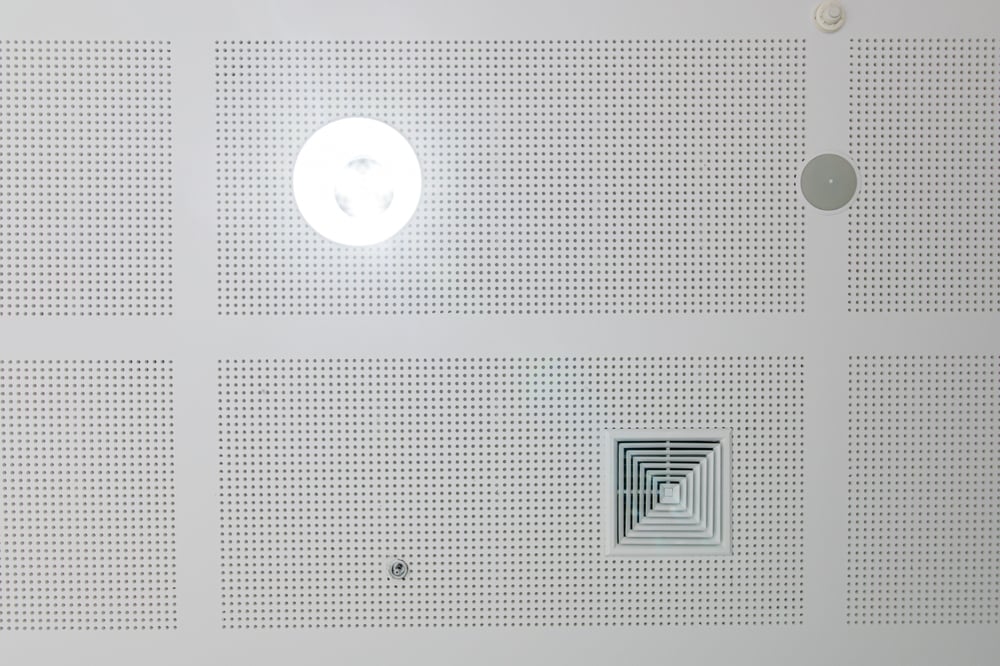
When insulation is installed in this space, it improves sound control. In many projects, acoustic ceiling insulation is also paired with sound insulation ceiling tiles to improve overall noise control and acoustic performance.
Together they help:
- Absorb airborne sound
- Reduce sound reflections
- Limit sound movement between rooms
Because of this, drop ceiling acoustic insulation is widely used in offices, conference rooms, classrooms, and healthcare facilities. It helps create controlled environments where clear communication and reduced noise distractions are essential.
Reduced Echo in Large Spaces
Large rooms with hard surfaces often experience echo and reverberation. Sound waves bounce off ceilings, walls, and floors. This can make conversations difficult to understand. Acoustic ceiling insulation helps absorb these reflections. This improves speech clarity and makes communication easier in shared spaces.
Improved Workplace Comfort and Focus
Excessive noise can affect concentration and increase stress in the workplace. Constant background noise makes it harder for employees to focus or communicate clearly. Installing ceiling acoustic insulation helps create a more comfortable work environment.
Quieter workspaces often lead to:
- Better concentration
- Clearer communication
- Reduced stress
- Higher employee satisfaction
Improving acoustic performance is one of the most effective ways to improve workplace conditions. A quieter space supports focus, communication, and overall employee comfort.
Common Materials Used in Acoustic Ceiling Insulation
Several materials are commonly used in acoustic ceiling insulation systems. Each provides sound control along with additional performance benefits.
Fiberglass Insulation
Fiberglass insulation is widely used in commercial ceilings. Its fiber structure traps and absorbs sound waves effectively.
Key benefits include:
- Strong sound absorption
- Fire resistance
- Lightweight installation
- Cost efficiency
Mineral Wool Insulation
Mineral wool, also called rock wool, offers excellent acoustic performance and durability. It is often used in commercial and industrial spaces.
Advantages include:
- High sound absorption
- Fire resistance
- Moisture resistance
- Long-term durability
Cellulose Insulation
Cellulose insulation is made from recycled paper materials and treated for fire resistance. It provides effective sound dampening while supporting sustainable building practices.
Benefits include:
- Environmentally friendly materials
- Good acoustic performance
- Additional thermal insulation
Additional Benefits of Acoustic Ceiling Insulation
Although noise reduction is the primary goal, ceiling insulation systems also improve overall building performance. These systems contribute to energy savings, safety, and long-term value, making them a practical investment for both residential and commercial spaces.
Energy Efficiency
Insulation slows heat transfer through ceilings, helping maintain consistent indoor temperatures throughout the building. This reduces the strain on heating and cooling systems, allowing them to operate more efficiently. As a result, energy consumption decreases, which can lead to lower utility costs over time. Improved temperature control also enhances overall indoor comfort in different seasons.
Fire Protection
Many acoustic insulation materials are designed with fire-resistant properties that help slow the spread of flames. This added layer of protection supports overall building safety and can provide valuable time during emergencies. Properly installed insulation can also help buildings meet fire safety codes and regulatory standards. These features make it an important consideration for both safety planning and compliance.
Long-Term Building Value
Buildings with effective sound control are generally more comfortable and appealing to occupants. Reduced noise levels can improve productivity in commercial spaces and enhance the quality of life in residential settings. Over time, this can lead to higher tenant satisfaction and retention. Proper insulation also adds to the overall durability and value of the property.
Professional Guidance for Acoustic Ceiling Insulation
Acoustic ceiling insulation affects long-term workspace comfort, productivity, and building performance. The right materials must support sound absorption, structural compatibility, fire safety standards, and overall ceiling system performance. Proper installation within suspended or structural ceiling systems is also critical for effective noise control.
As a Houston-based commercial ceiling systems provider with over 20 years of experience, Ceil Tex works with contractors, designers, and facility managers to evaluate acoustic requirements, insulation materials, ceiling assembly design, and code compliance. Our team focuses on ceiling systems that fit correctly and deliver reliable acoustic performance over time.
Are you planning to improve workspace acoustics or upgrade your ceiling insulation system? Contact us for expert guidance. A professional evaluation helps you select the right materials, maintain compliance, and avoid costly installation issues while protecting long-term building performance.